
Option 1 | Full-Day 8:00 a.m. - 3:30 p.m.
Option 2 | Half-Day 8:00 a.m. – 11:30 a.m.
Option 3 | Extended-Day 7:30a.m. - 5:30p.m.
Maria Montessori, the first female physician in Italy, invented the Montessori approach to education. The Montessori method concentrates on the specific developmental needs of the child. Montessori believed that everyone learns differently, and at his or her own pace. She created a new type of classroom, a prepared environment, to accommodate and stimulate the individual interests of her students. The role of the directress becomes to follow the development of the child, on a one-to-one basis.
Independence. The Montessori method has been in existence for more than one hundred years. If there is one trait that exemplifies the success of a Montessori school, it is that their students are creative, responsible and highly independent. If independence is coveted above all else, it is because it creates the freedom that is needed to develop, both academically and socially. Montessori helps children to think and act for themselves, independently and with the courage of thought.
At Wayland Montessori School each child is encouraged to develop at their own pace in a specially designed learning environment. The materials are carefully prepared and displayed for the children. Children are thereby free to choose their own activities. Each activity that is undertaken is complete in itself and relates to the other activities that cover physical, social and intellectual aspects of the development of the child. Children often concentrate for long periods of time, working individually or spontaneously with a group of friends.
The materials in an authentic Montessori classroom are specifically designed and engineered to increase and enhance your child. “The fundamental fact in the preparation of the environment is to have only one set of each type of material. When there is only one specimen of each object, and if a piece is in use when another child wants it, the latter will wait for it to be released. Since this happens every hour of the day for years, the idea of respecting others, and of waiting one’s turn, becomes a habitual part of life which always grows more mature.”
Maria Montessori states it best when she writes, “We must support as much as possible the child's desires for activity; not wait on him, but educate him to be independent. It is necessary for the teacher to guide the child without letting him feel her presence too much, so that she may always be ready to supply the desired help, but may never be the obstacle between the child and his experience.” Alongside these principles, Montessorians believe in a mixed age classroom.

· Emphasis placed on cognition.
· Emphasis placed on social formation.
· Teacher as guide of classroom.
· Environment and method promote self-discipline.
· Primarily individual instruction.
· Teacher encourages collaboration.
· Mixed age children.
· Child chooses their own work.
· Self-teaching materials help child learn concepts.
· Child is allocated time to complete lessons.
· Learning pace set by individual student.
· Child discovers errors.
· Internal reinforcement of learning success.
· Personal feelings of progress.
· Child is free to work in the classroom.
· Group participation elective.
· Self care learned.
· Emphasis placed on rote learning.
· Emphasis placed on rote social behavior
· Teacher controls the classroom.
· Teacher is only disciplinarian in the classroom.
· Teaching dictated by teacher.
· Same age children.
· Teacher assigns work.
· Teacher instructs child on concepts.
· Limited time allotted on projects.
· Learning pace set by group.
· Teacher highlights the errors the child makes.
· External reinforcement of learning success.
· Rewards and punishments.
· Normally assigned a specific location in class.
· Group participation is required.
· Self care left to parents.
At Wayland Montessori School, our Toddler Program serves children ages 15 months to 2.9 years in a warm, carefully prepared environment. During these early years children build independence, language, coordination, concentration, and a sense of self, and our approach honors each child as a capable, curious learner. Our Toddler Program offers:
Our experienced educators observe each child closely and offer guidance that fits their interests, abilities, and pace.
Children pour, spoon, wash tables, prepare food, dress, and care for plants, building coordination, concentration, and independence.
Songs, stories, conversations, and classified language materials build vocabulary and a strong foundation for future literacy.
Carefully selected materials invite children to touch, sort, compare, and observe as they refine their senses.
Purposeful activities let children climb, carry, balance, pour, and transfer, strengthening coordination and body awareness.
Gentle guidance helps children practice grace and courtesy, empathy, cooperation, and self-regulation.
Music, art, seasonal celebrations, and daily outdoor exploration nurture wonder and an appreciation for the natural world.
At Wayland Montessori, we believe that every child is unique and deserves an education tailored to their individual needs and pace. Our primary program offers:
Our experienced educators provide one-on-one attention, ensuring each child progresses at their own optimal pace.
Children engage in activities that develop fine motor skills, concentration, and independence.
Through various materials and activities, we nurture early literacy skills and a love for language.
Concrete materials introduce mathematical concepts, laying the groundwork for abstract thinking.
Children refine their senses through specially designed Montessori materials.
We introduce children to the wonders of geography, science, and cultural diversity.
Our program encourages self-expression through various art forms and creative activities.
We emphasize the importance of environmental awareness and provide opportunities for nature exploration.
At Wayland Montessori School, we believe that even our youngest learners are capable, competent, and deserving of respect. Our Toddler Program provides a strong foundation for future learning by nurturing independence, confidence, curiosity, and joy during these formative years.
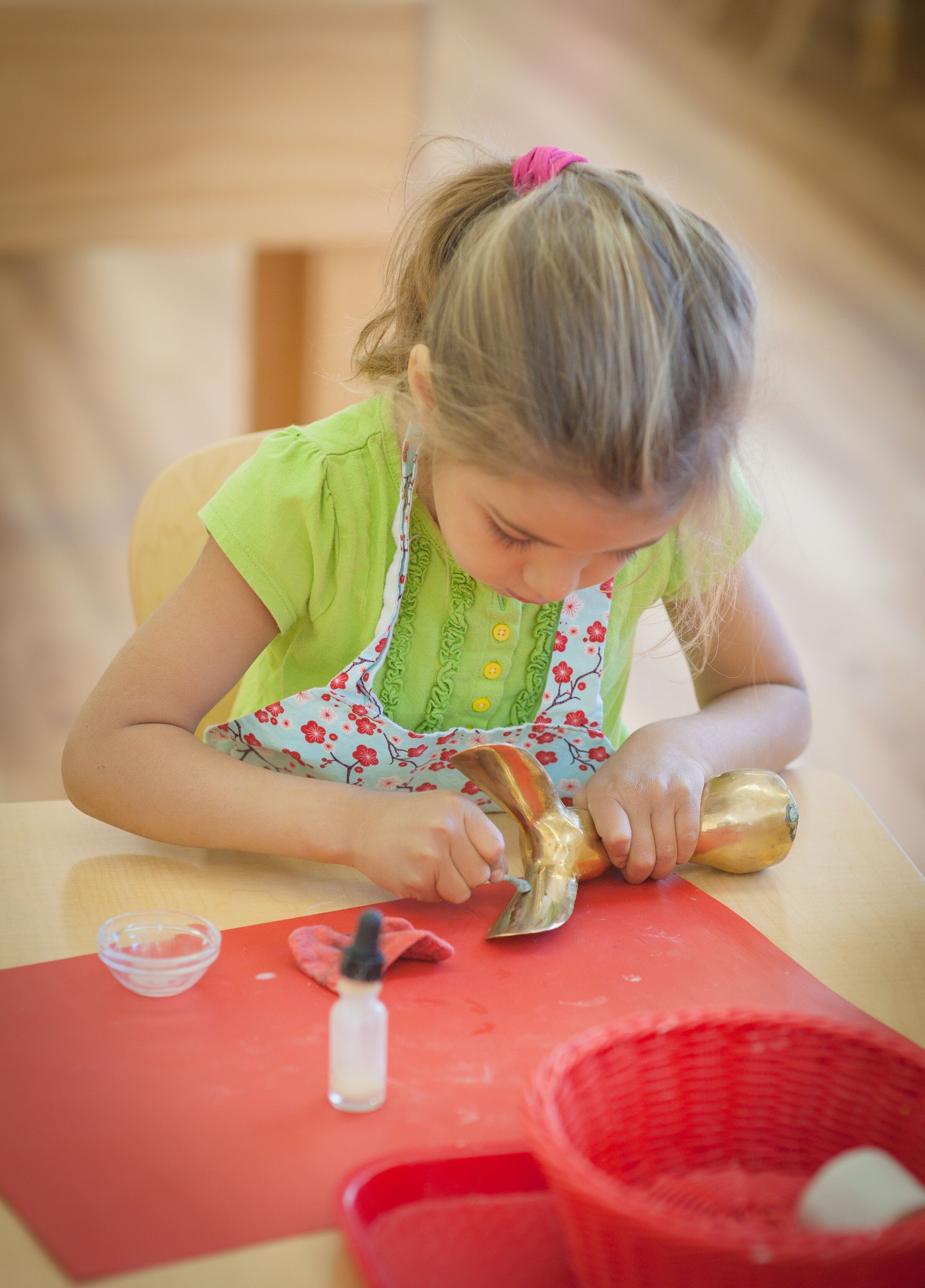
In the Practical Life area, children work with familiar household activities that they see in everyday life, such as washing, sweeping, etc. By working in this area, children are not only gaining their essential life skills but they are also developing eye-hand coordination and the ability to concentrate for long periods of time, covering the duration of an activity. As a result of their own achievements, they build self-confidence.
Social skills are developed in conjunction with a vocabulary that is based on real experience. These tasks help prepare the children for reading and writing but also look beyond such basic skills into the pleasures of reading and writing, and the imagination and creation that is involved.
In the Children’s House, mathematical concepts are introduced to the children in a concrete form. By working with these materials, children slowly grasp concrete ideas and gradually form abstract concepts. This work provides them with a solid foundation for elemental mathematical principles used later in arithmetic work.


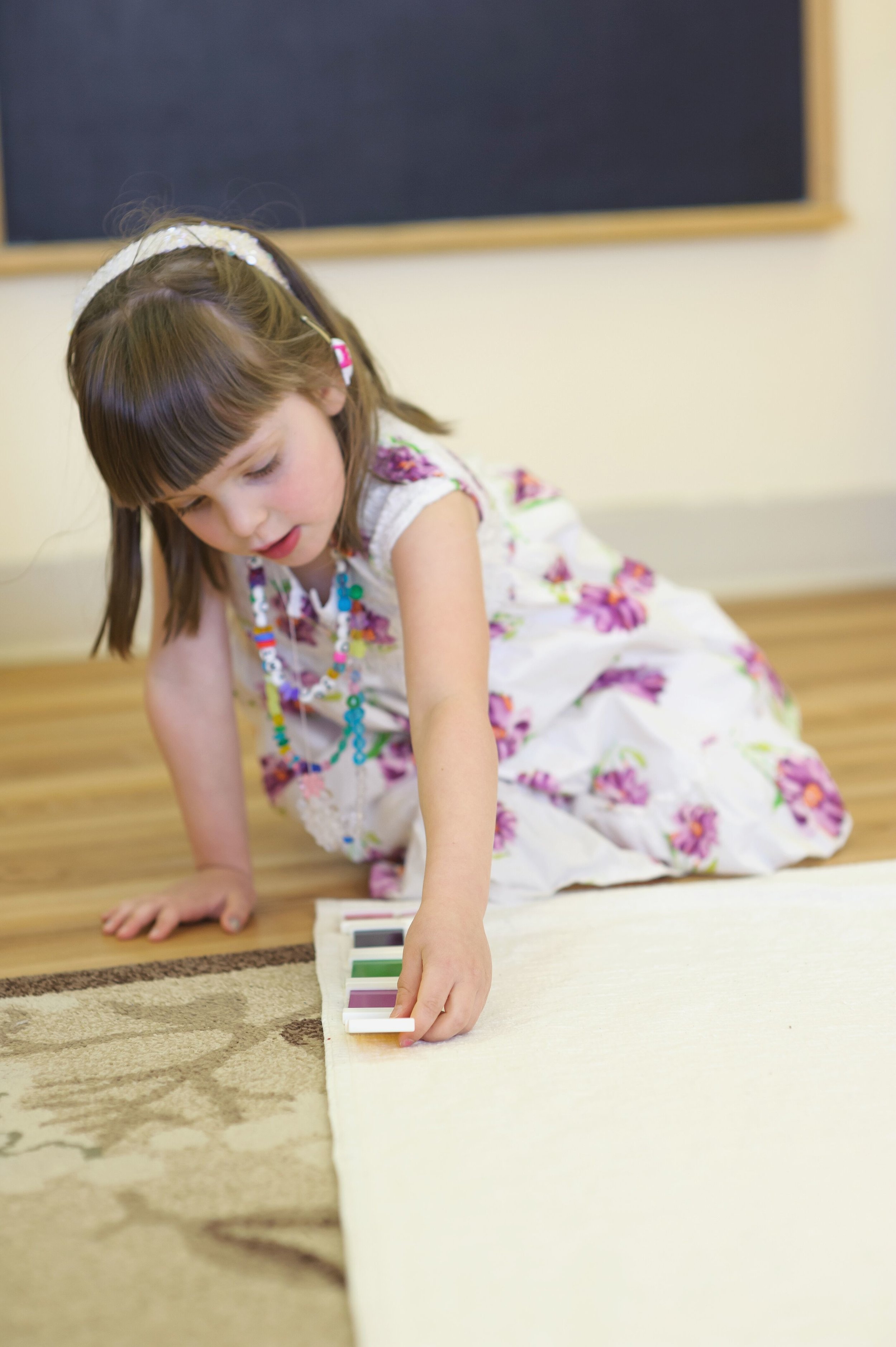
Children are keen observers, and as a result, extremely aware of the world. Through their senses, they are constantly exploring their environment. The sensorial materials challenge the children on a number of levels, most importantly, they encourage the children to engage with the elements of the world. These selected activities nourish and develop the senses, especially communication, observation and exploration.
One of the fundamental tenets to Montessori education is culture. Montessori students are well rounded because Montessori strives, above all else, to connect the child to the concrete, material world. Through various activities and materials, Montessori exposes children to the joys of culture. We constantly strive to expose our students to a wide range of cultural activities, which include music, art, geography. We also have partnered up with Mass Audobon Broadmoor to bring a great nature experience here to our classrooms weekly with Mr. Ken.
Our team of committed teachers brings years of Montessori expertise to the classroom.
We provide a secure space that encourages discovery and exploration.
Our approach nurtures social, physical, emotional, and spiritual growth.
We value our partnerships with families and the broader Wayland community.