How One Simple Material Teaches a Child to See
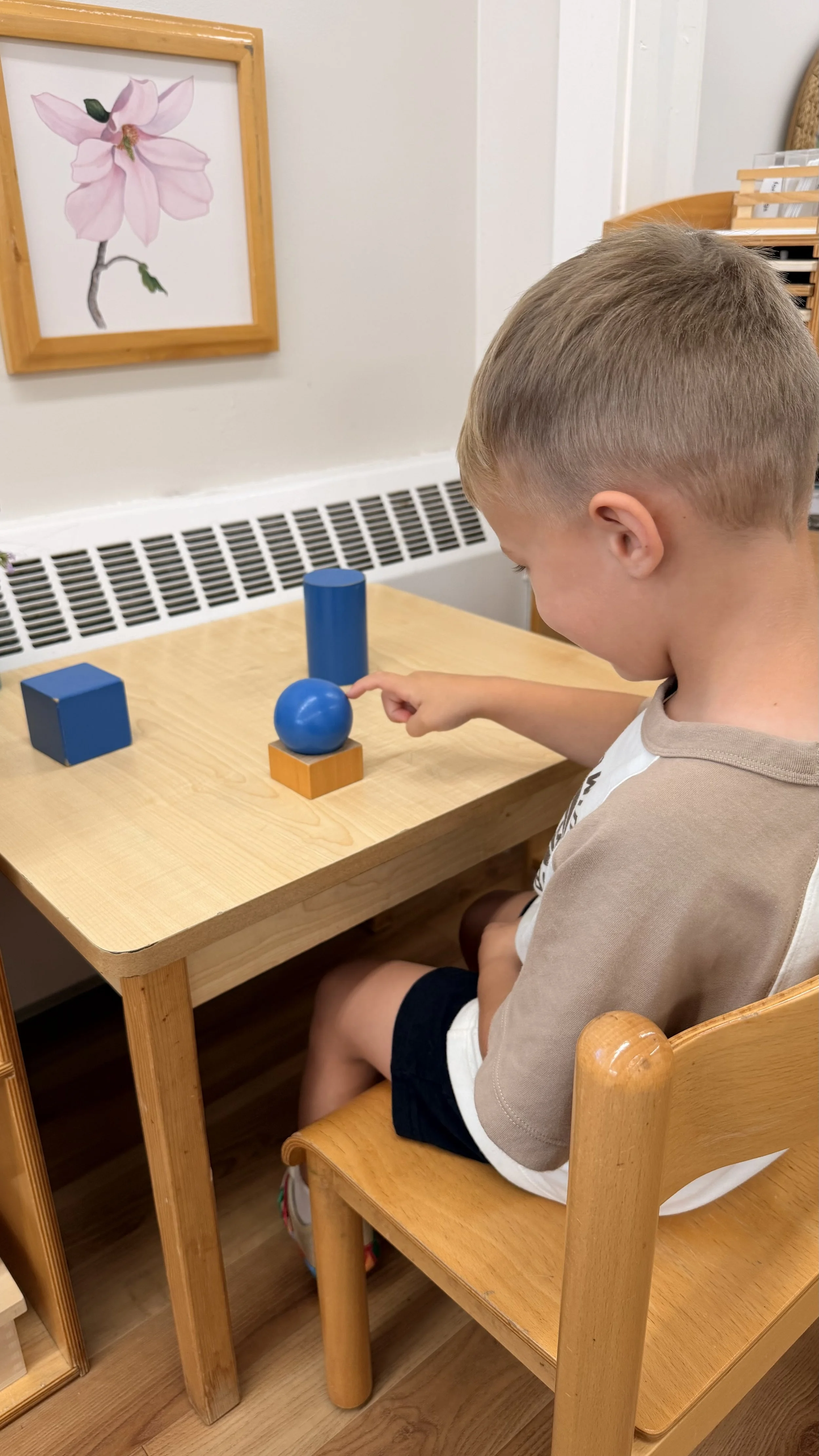
The sensorial area of a Montessori classroom is often misunderstood. It isn't a sensory bin full of textures to explore for a few minutes. It's a set of materials designed to sharpen how a child sees, measures, and understands the world.
Each sensorial material asks a child to focus on one quality at a time. A set of cylinders might vary only in height, or only in width, with every other detail held the same. That narrow focus matters. It lets a child build a real skill: judging size by sight alone, one clear quality at a time.
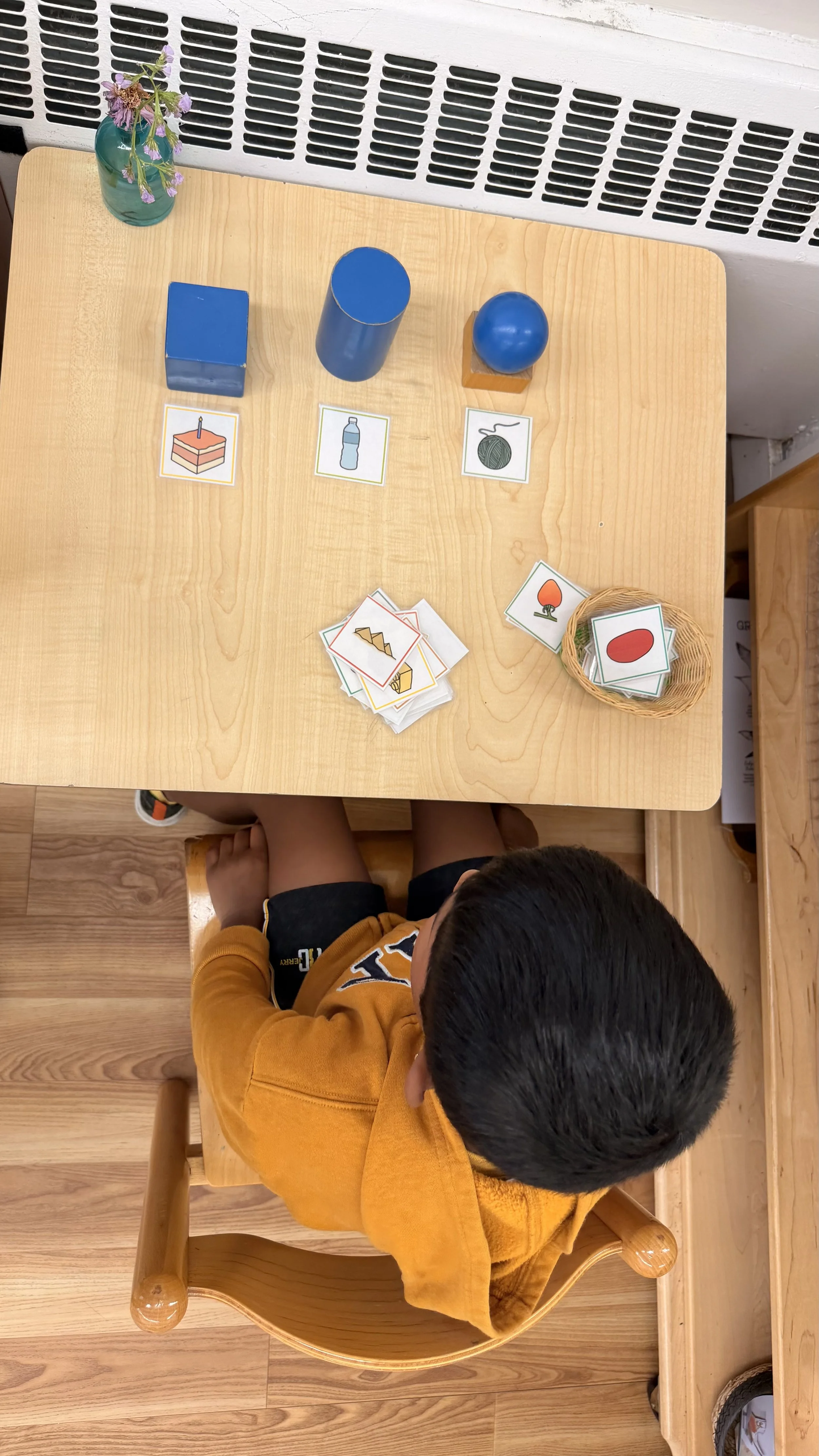
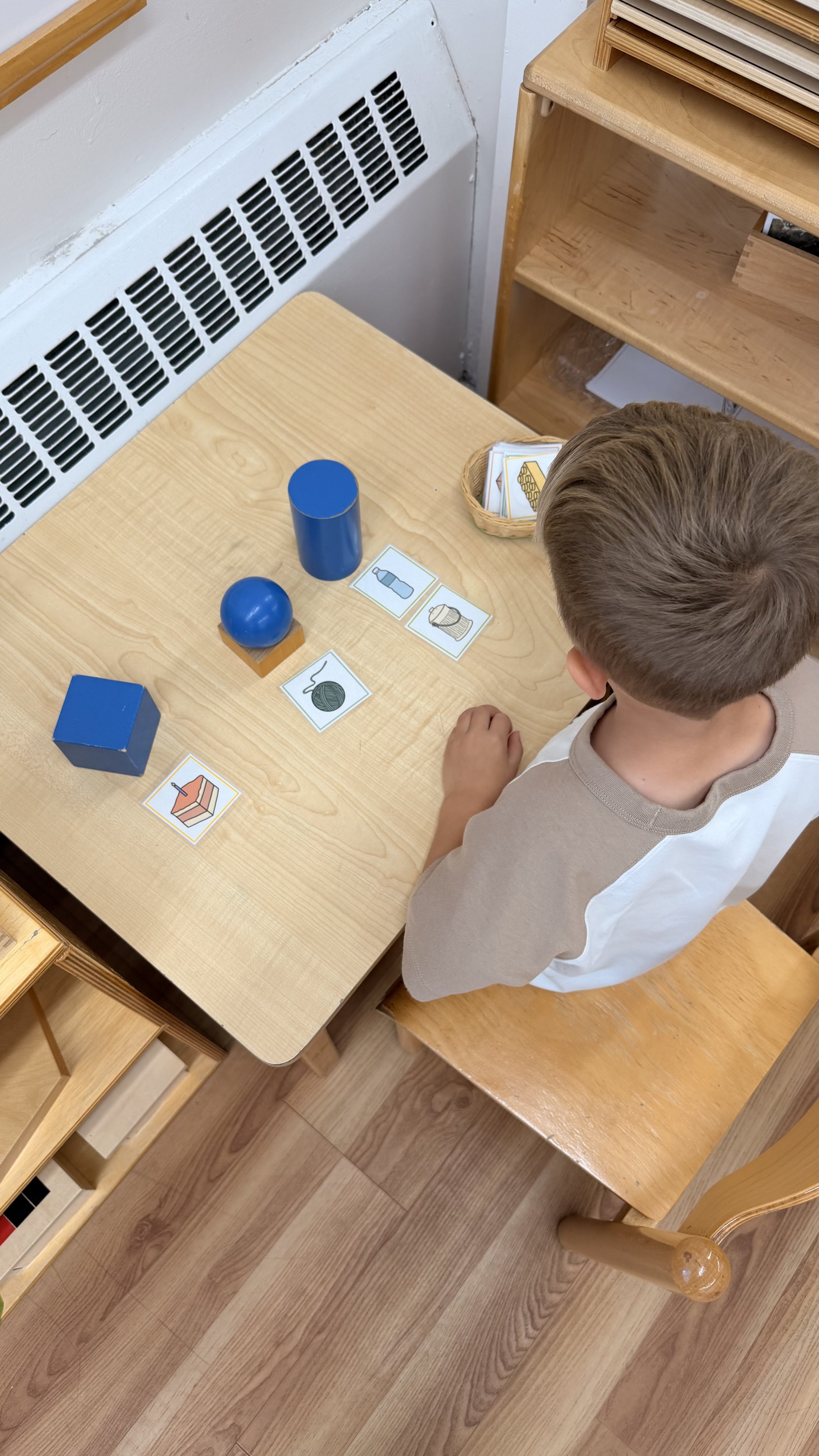
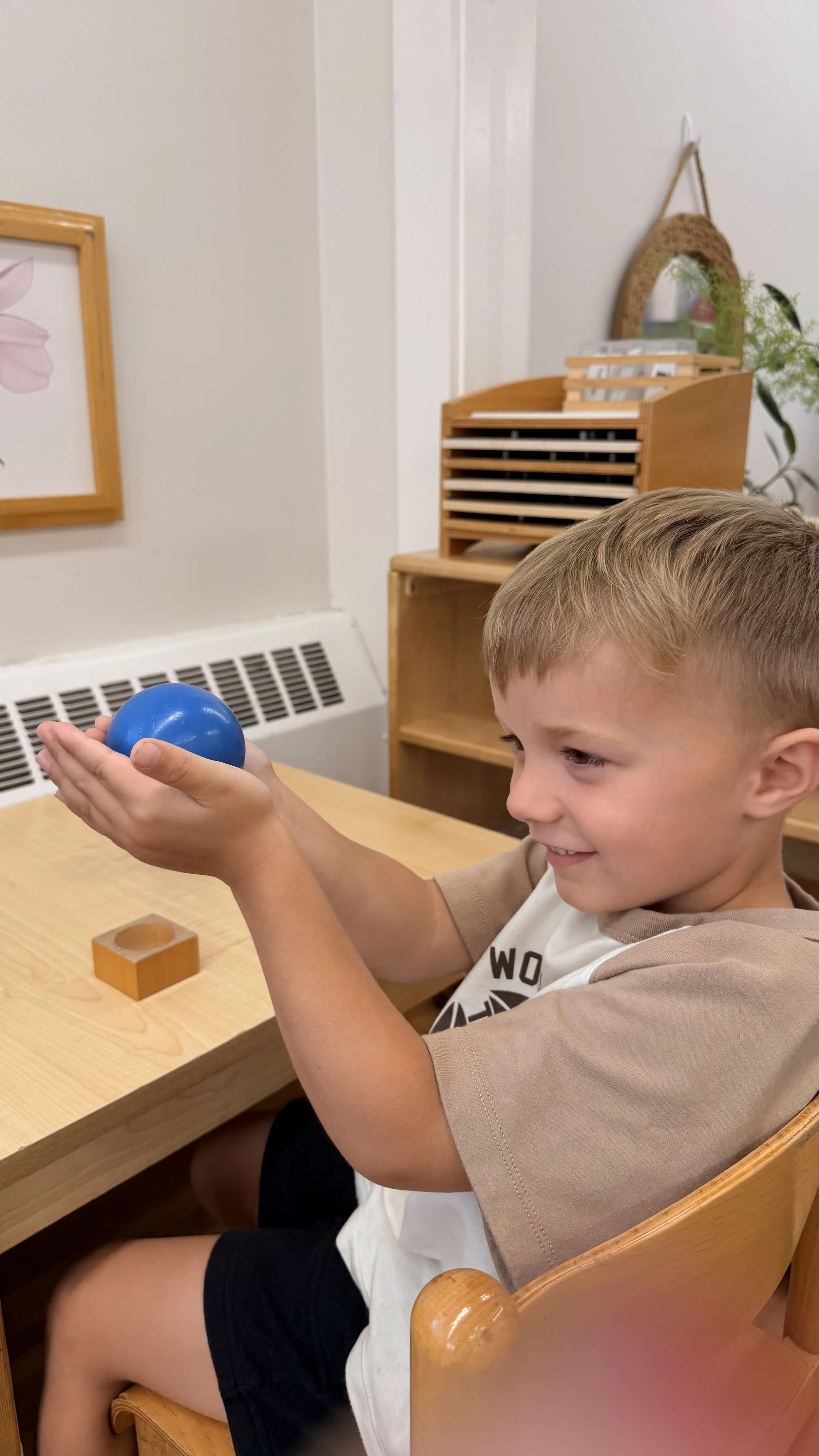
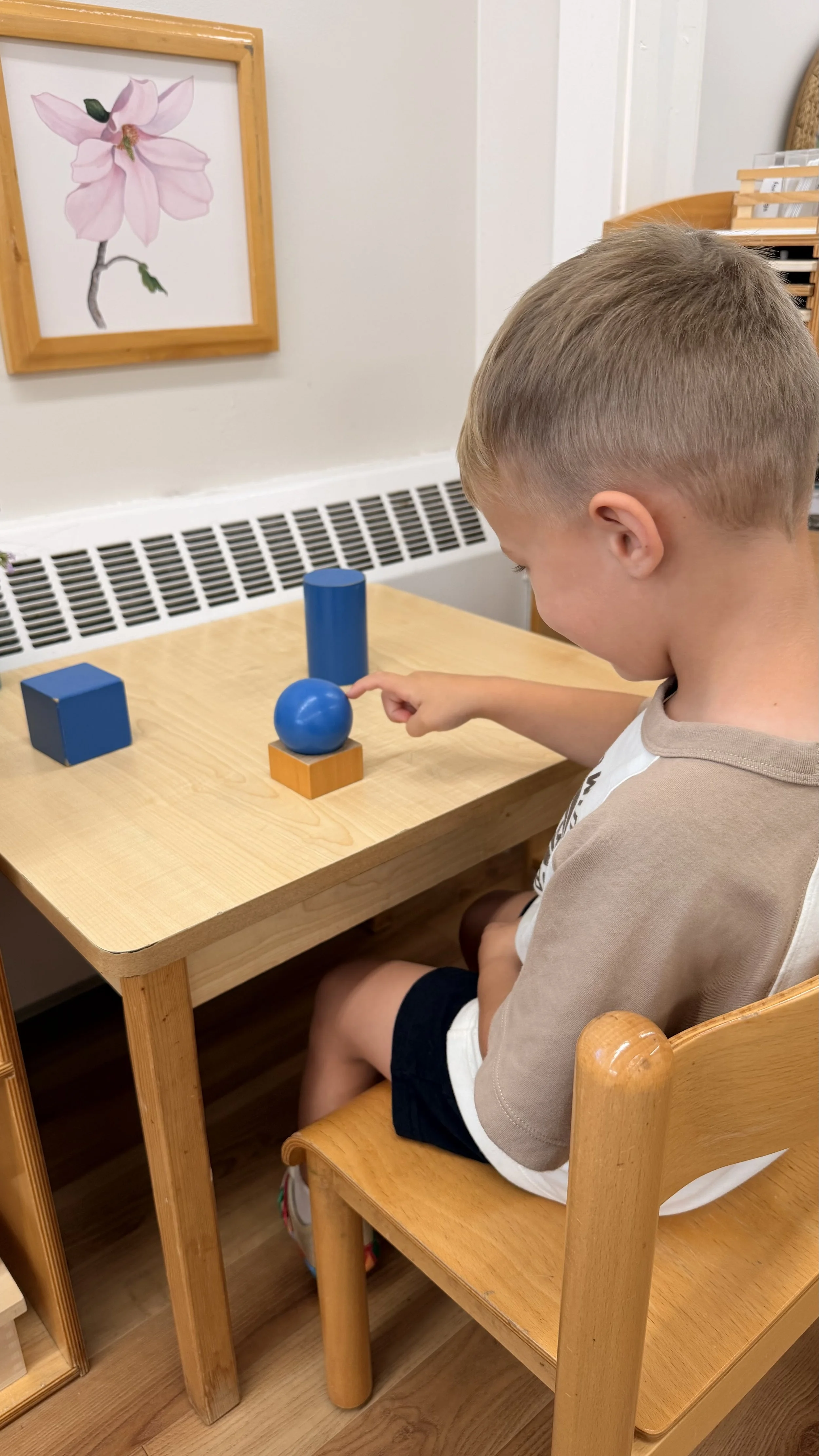
This week, our children explored a favorite example: a wooden sphere. A young child handling that sphere is building an early understanding of a shape most of us take for granted. Later, when that same shape appears flattened on a page as a circle, the child already has a felt sense of what it represents. Later still, that same shape becomes the globe on a shelf, or the orange sitting in a fruit bowl. One material quietly built the foundation for all three.
This is what we mean when we talk about spatial awareness. It's the quiet skill of looking at something and knowing, without measuring, whether it fits. Our sensorial materials build that skill deliberately, one clear, focused experience at a time.